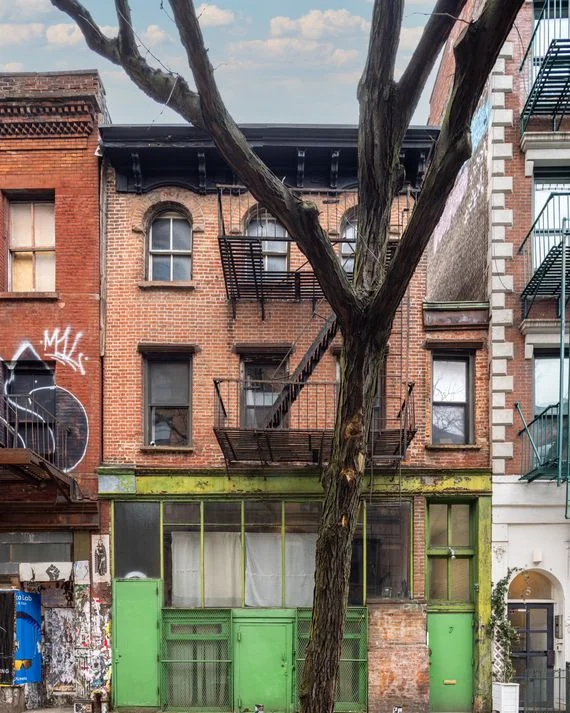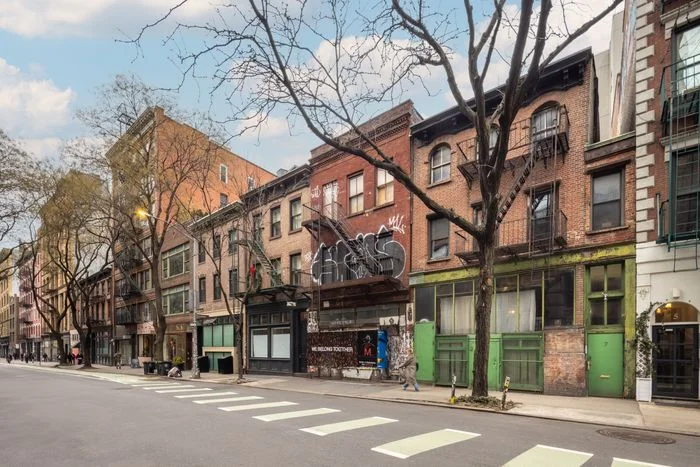
On Bleecker Street, between Elizabeth and the Bowery, a shabby storefront, painted murky green, was once a destination for generations of photographers who had learned their trade by poring over the off-kilter images of Robert Frank. For more than 40 years, 7 Bleecker was Frank’s studio and home, the place where he snapped his friend Allen Ginsberg, shot sections of his experimental films (Home Improvements and C’est Vrai!), and worked with the bands he put on film — Patti Smith, New Order. Unlike other artists who showed at MoMA and sold at auction for hundreds of thousands, Frank made himself easy to find — setting out a folding chair onto the sidewalk, often alongside a second seat for his wife, the sculptor June Leaf. On Purim one year, a group of Jewish photographers came out to meet them there — starting an informal tradition. And when Frank died, in 2019, flowers threaded through the storefront grill turned the space into a monument.
Leaf died in 2024, and their home is now on the market for the first time since they arrived in the late 1970s as renters. The three-story brick building looks like it might have been squeezed into a busy row. But it was actually one of the block’s earliest, an 1817 home built on “what was essentially still a field” by a prominent owner (James Roosevelt, great-grandfather of FDR). As the city grew around it, tenants included a laundry, decades of fur dealers, and a stationery shop. Upper floors served as workspaces, then as the rooms of an SRO, with bedrooms and bathrooms opening directly off the staircase.
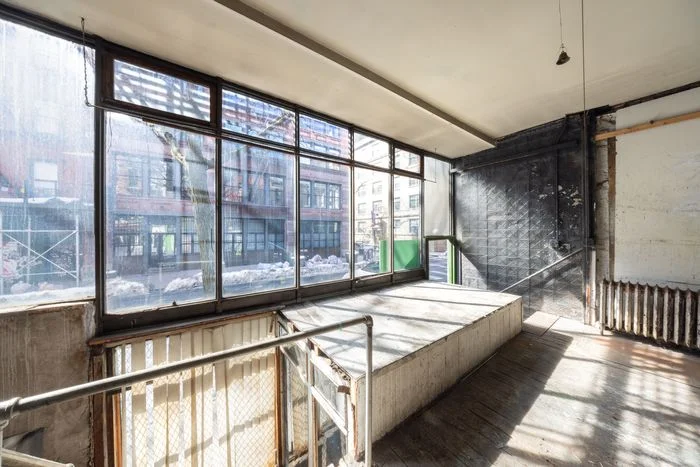
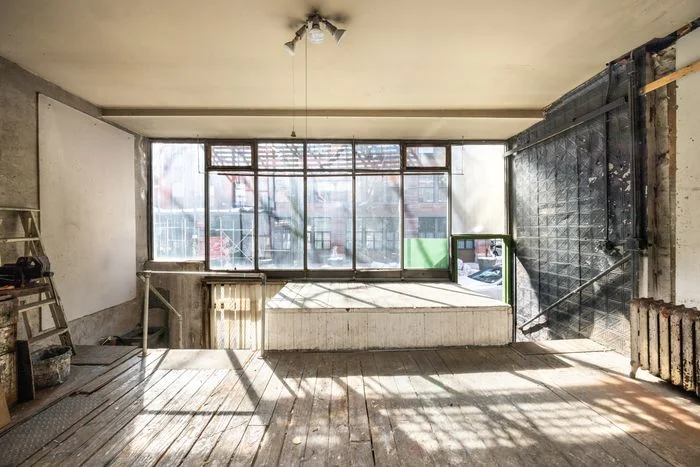
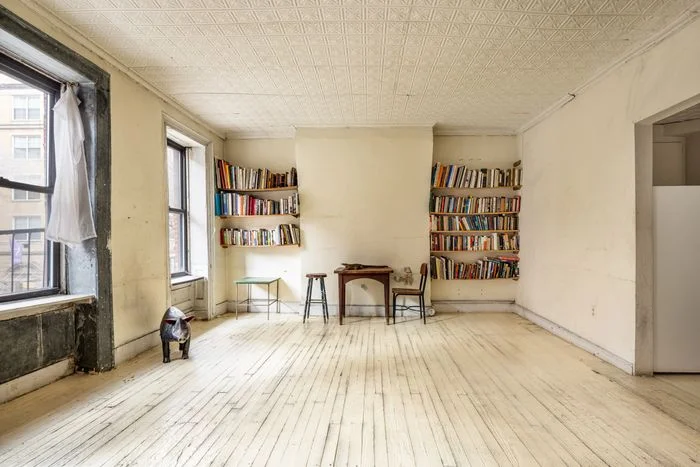
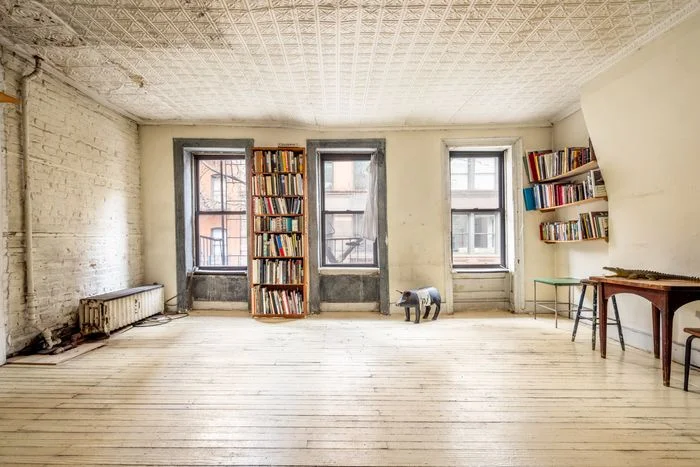
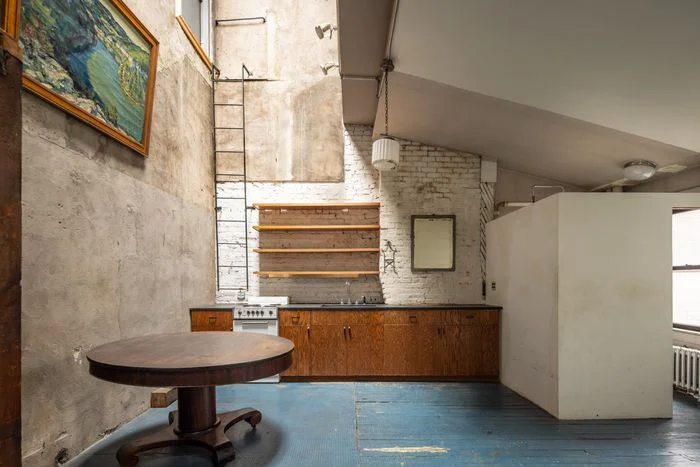
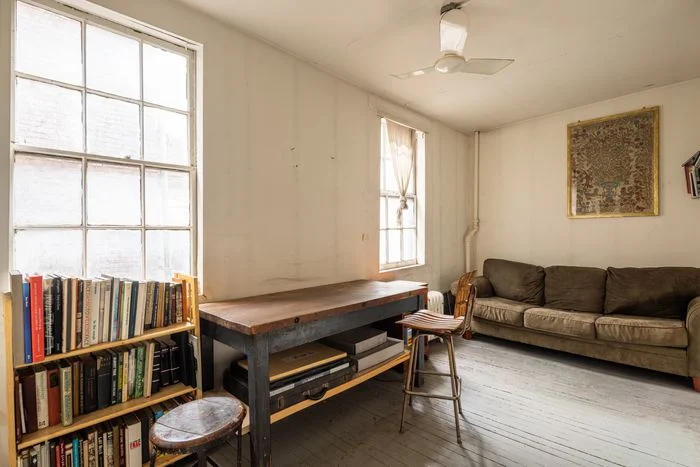
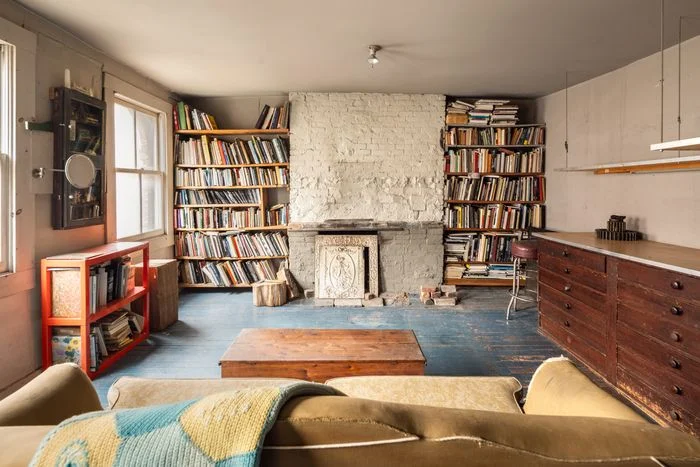
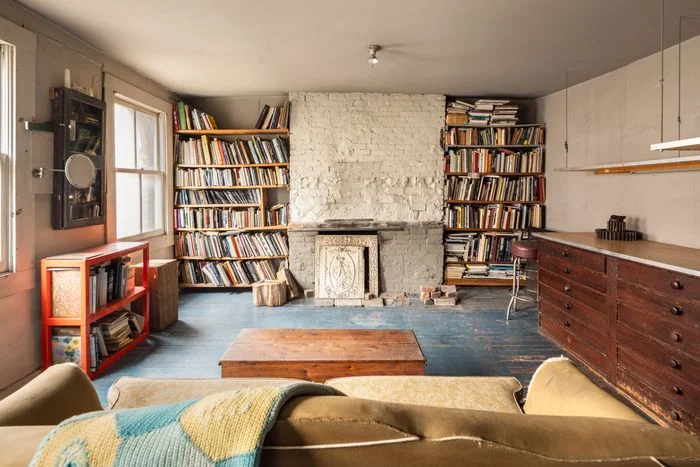
When Frank and Leaf arrived, the block had already been staked out by artists, who had founded an alternative gallery and studio space across the street at 10 Bleecker. Frank and Leaf planted a tree out front and treated the old ground-floor space, just a few steps up, as a studio. One floor above, the front room — with sunny windows over Bleecker and a wood-burning fireplace that might date back to the Roosevelt era — served as a living and dining area. When the critic Richard B. Woodward stopped by for a visit in the 1990s, he saw the couple’s decision to live amid peeling paint and crumbling brick as a way of announcing “that the occupants could care less about money, dirt, post-modern convenience or what passes for good taste.”
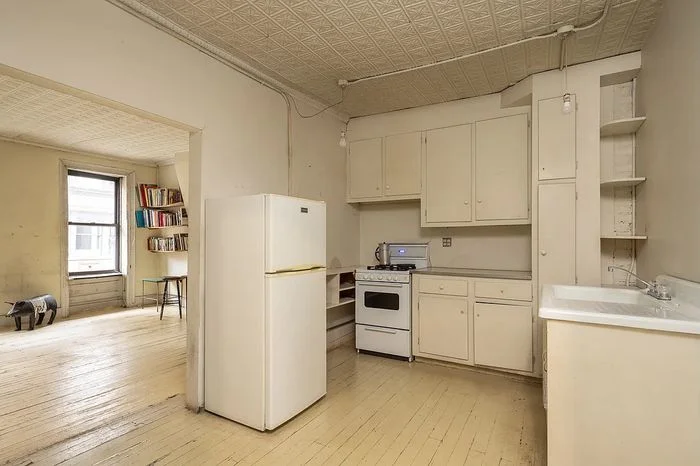
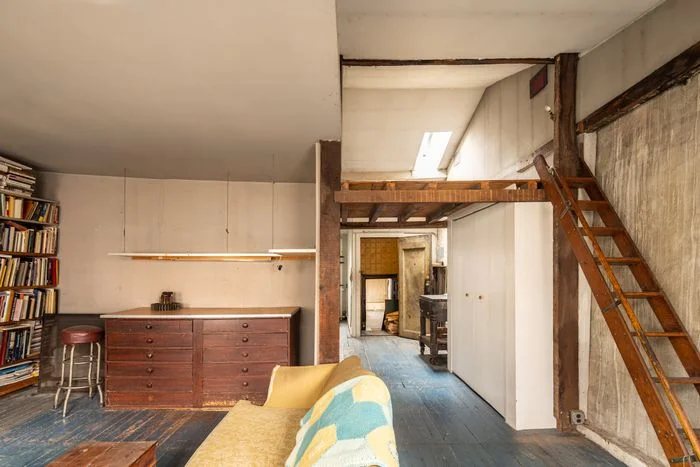
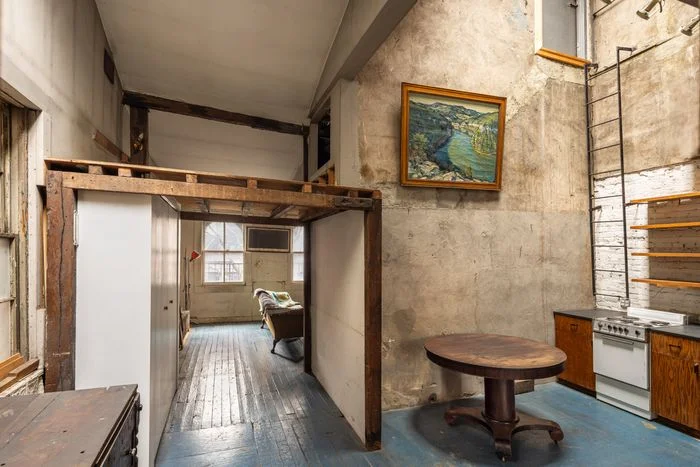
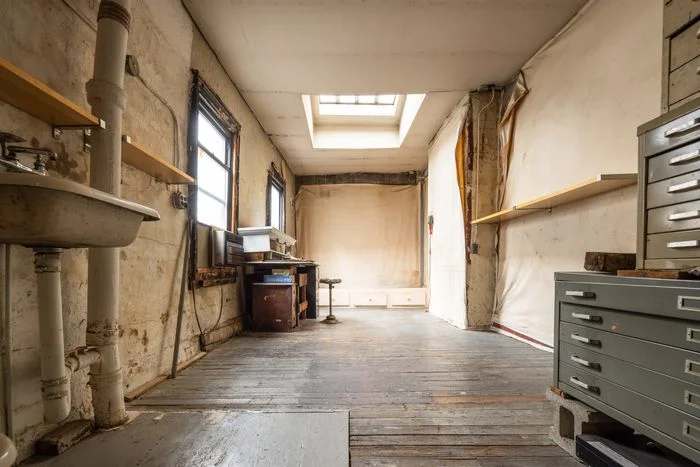
Maybe so, but now the home — which they bought in 1982 — is a rare specimen of untouched, old-world Bowery life; a “fortress against time,” as the poet and journalist Cary Abrams put it after Frank’s death. A riser in the shop window, where Frank shot Ginsberg’s portrait, looks like it might have survived from the stationery-store days. A tiny bedroom with a sink and skylight could serve as a film set for an SRO. Bare planks serve as bookshelves. When I sent the listing to a Frank acolyte, she replied right away, as many other photographers would, “Wouldn’t touch a thing.”