
For months now, real-estate developer Michael Shvo has been insisting that everything is just fine, despite troubling signs at his portfolio of trophy properties. During the pandemic, Shvo snapped up the Transamerica Pyramid in San Francisco, the Raleigh Hotel in Miami Beach, and the Coca-Cola building at 711 Fifth Avenue, a $3 billion spree made possible with the backing of German pension fund BVK, the country’s largest public pension group. It was a triumphant comeback for Shvo, who went from running a taxi fleet in the 1990s to becoming a hotshot broker before pivoting to developer in 2010s, only to be wiped out by a tax-evasion case over his art collection and Ferrari in 2018.
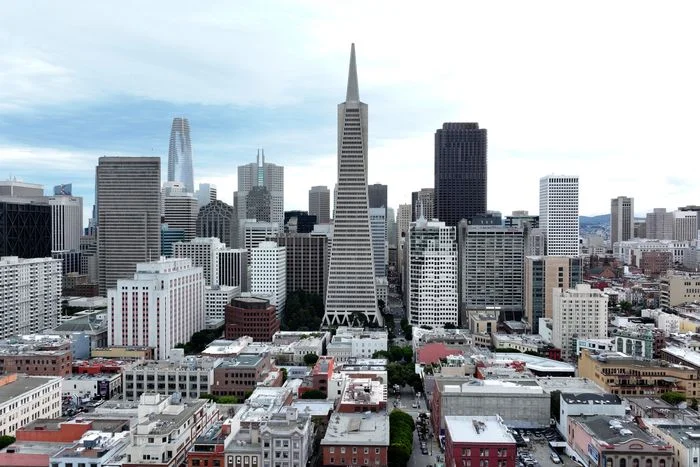
But a few years ago, Shvo’s new real-estate empire started to wobble: He defaulted on a $200 million loan for the Mandarin Oriental Residences in Beverly Hills that led to a sale under duress last winter, and in October, he was forced to sell the Raleigh Hotel after sales stalled out on the unfinished project (he tried to match the $270 million offer to stop the sale but ultimately relented). He’s also been locked in an ongoing lawsuit with the CORE Club over its space at 711 Fifth. Then, last week, Green Street News reported that not only was the Transamerica Pyramid selling, it was selling it at a loss: $700 million, some $300 million less than Shvo and his partners put into the building. The buyer of the tower is Yoda PLC, a Cyprus-based investment firm.
Shvo’s company and Deutsche Finance America paid $650 million for the iconic office tower in 2020 and then plunged into an ultra-high-end revamp of the tired 1970s property. Shvo hired Norman Foster to do the renovation, which included a new public café, a pocket park, and an art exhibition space, sinking what they described at the time as nearly a $1 billion investment into the property (a representative said that renovation ultimately cost $250 million, bringing the total to $900 million). At a time when San Francisco’s office market was cratering, many civic and business leaders were thrilled to see so much money flowing into a skyline-defining office building. And things there seemed to be going well: Shvo recently boasted about a 4,000-square-foot office lease at $300 per square foot, which would be a West Coast record, and bringing occupancy to 85 percent. But the tower’s turnaround apparently didn’t pan out as Shvo had hoped — with him still at the helm, soaking up the credit. “I have the No. 1 building in San Francisco,” Shvo told the San Francisco Standard a year and a half ago. “We’re creating a product that is unique and expensive. The people who can afford it happen to be at the top of their industries. That’s the inherent DNA of the Shvo universe.”
Shvo has previously swatted away suggestions that his relationship with BVK was strained or that the pension fund was looking to replace him. Instead, he’s spun his residential sell-offs as part of a strategy to focus more on the commercial sector. More recently, however, it’s become clear that there was tension between the two (especially after executives who’d funded Shvo’s most recent rise were pushed out). In August, Shvo filed $85 million in arbitration claims against BVK. And as the San Francisco Chronicle reported early this year, BVK told members it expected to lose about $1 billion on its U.S. investments, partly because of economic challenges but also because of project partners that “did not meet expectations placed on them.”